Author: perry

Five Inches or Six? Why Tri-Valley Storms Overwhelm Standard Gutters

Here’s a specific scenario. It’s December, a real storm is coming through, and you’re watching water pour over the front edge of your gutter in a sheet. You had them cleaned six weeks ago. There’s nothing in them.

That’s not a debris problem. That’s a capacity problem, and it’s one of the most common things we get called out for in the valley.

The Number That Matters Isn’t the Annual Total

San Ramon gets somewhere around 18 to 20 inches of rain a year depending on where you are in the valley. Compared with almost anywhere east of the Rockies, that’s nothing, and it’s why gutters here get treated as an afterthought.

But annual rainfall is the wrong measurement entirely. What a gutter has to survive is peak flow: the most water that hits it in a single hour, not the total it handles across a year.

And our rain is unusually concentrated. Research from the Center for Western Weather and Water Extremes at Scripps found that in Northern California, roughly 60 to 120 hours of rainfall per year deliver more than half the annual total. Most of our water arrives in a small number of atmospheric river events, and one of those can drop an inch in an hour.

A gutter doesn’t experience 20 inches spread over twelve months. It experiences an inch an hour, several times a winter, with everything else being drizzle. Size the system for the average and it fails during the events that actually cause damage.

Why So Many Valley Homes Have a 5 Inch System

Five inch is the builder default nationwide. On a tract of several hundred homes it’s specified once for the whole development, priced by the foot, and installed the same way on every roofline regardless of what that particular roof does with water. That isn’t necessarily wrong, and five inch handles a great many homes here perfectly well. But “specified once for the subdivision” is different from “sized for your roof,” and the gap shows up in a hard December rain.

What actually determines whether a gutter overflows is how much roof area drains into a given run, how long that run is, how many downspouts it has, and whether water is being fed into it from above. A 40-foot run with one downspout collecting a large roof plane will struggle no matter how clean it is. The water has nowhere to go.

What the Sizes Actually Do

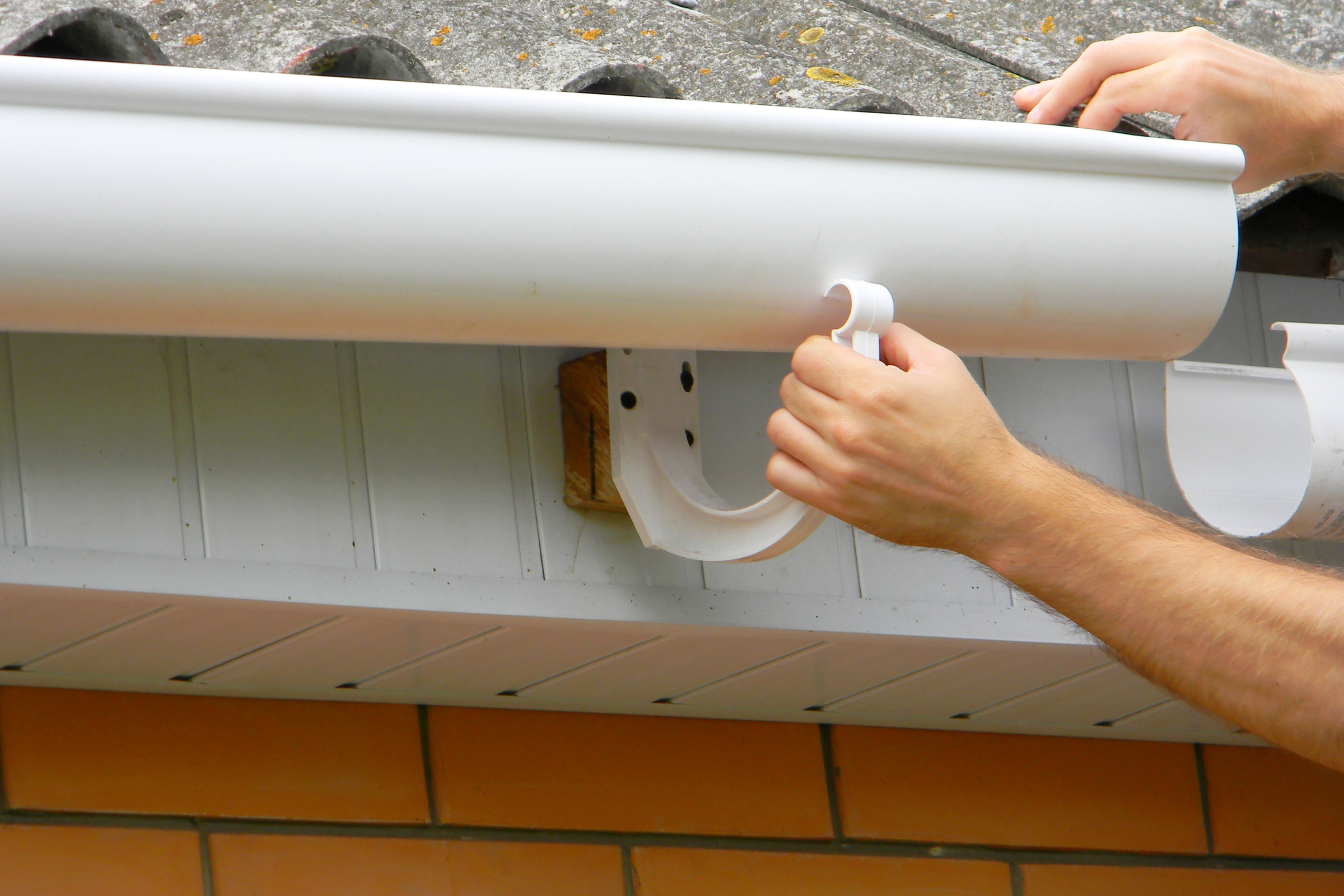
A 6 inch gutter is only an inch wider than a 5 inch, which is why the difference gets dismissed. But it carries roughly 40 percent more water, and the downspouts that pair with it are correspondingly larger. That’s not an incremental improvement. That’s the difference between coping with an atmospheric river and giving up at the front lip.

Here’s how we size it:

SizeBest suited to
5 inchRuns under 40 feet with at least one downspout. Gutters that don’t currently overflow in normal rain. Runs that aren’t receiving drainage from an upper roof.
6 inchRuns over 40 feet that can’t accommodate a second downspout. Any run over 60 feet. Lower gutters catching water from upper gutters. Rooflines that funnel a large area into a short section. Inside valleys that overflow in heavy rain. Metal roofs.
7 inch and largerAvailable for unusual rooflines and high-volume situations. Less common on residential work, but it exists when the math calls for it.
Mixed sizesYou don’t have to pick one for the whole house. Running 6 inch on the two problem elevations and keeping 5 inch elsewhere is often the most cost-effective answer.

That last row is worth sitting with, because most homeowners assume it’s an all-or-nothing replacement. It usually isn’t. If one side of your house handles storms fine and the north elevation floods every year, that’s where the money should go.

When 5 Inch is Genuinely Fine

Plainly: if your run is under 40 feet, it has a downspout, no upper roof is draining into it, and it doesn’t overflow during a real storm, your gutters are correctly sized. Leave them alone.

Upsizing a system that isn’t struggling is a waste of your money. We’d rather clean those gutters twice a year for a decade than sell you something you don’t need. If you call us out and that’s what we find, that’s what we’ll tell you.

The homes that need a second look are the ones with a symptom: water going over the edge in heavy rain, a section that erodes the same patch of landscaping every winter, an inside valley that fires a stream past the gutter entirely, or a persistent damp spot near the foundation on one elevation.

A Note for Dougherty Valley

If you’re in Windemere, your neighborhood was built between roughly 2002 and 2006, which puts those gutter systems at about twenty years old. Gale Ranch went up in phases from 2003 through the late 2010s, so it varies more by street.

Two things follow from that. The first is age: twenty-plus years of thermal cycling loosens hangers, opens seams, and flattens the pitch that moves water toward the downspout. Sometimes what looks like a capacity problem is really a repair problem, and a section that’s sagged half an inch will overflow at that low point long before the rest of the run is at capacity. 

We check that first, because it’s the cheaper answer and it’s often the right one.

The second is the original spec. These are large homes with complex rooflines, multiple gables, and upper roofs draining onto lower ones, all fitted with the same builder-grade 5 inch profile. Some of those rooflines were always going to outrun the gutter attached to them.

How to Figure Out Which One You Have

You don’t need us to start. Next time a real storm comes through, walk the outside of the house and look.

Water spilling over the front lip along a long stretch of clean gutter is a capacity signal. Water overflowing at one specific low point while the rest of the run stays fine is usually pitch or a sagging hanger. Water shooting past the gutter entirely where a valley dumps in is a concentration problem, often best fixed with a larger gutter on that one elevation.

Note which elevation and roughly where. Five minutes of that is more useful than anything we can determine from the ground on a dry day.

We’ll Size It to Your Roof

Our free roofline assessment is exactly what it sounds like. A Solutionist walks your home, measures the runs, looks at where the roof planes drain and where the water concentrates, checks pitch and hanger condition on what’s already there, and tells you what size the system should be. Sometimes the answer is a full installation in 6 inch. Sometimes it’s one elevation. Sometimes it’s re-pitching a run you already have.

Book a free roofline assessment or call (925) 905-9555, and we’ll give you a straight answer either way.


Fire Season, Diablo Winds, and Your Gutters: Why Metal Matters Here

Most gutter advice treats fire as somebody else’s problem. In this part of California it isn’t, and the connection between the two is more direct than people expect.

From September through November, the Bay Area gets Diablo winds: hot, dry air moving down off the ridges from the northeast, warming and drying as it descends, gusting to 40 miles per hour or more. They’re named for the mountain in our own backyard. Every homeowner in the valley knows the feeling of those days, when the air goes brittle and the hills turn the color of paper.

What those winds do to a roofline is the part worth understanding. They strip dry material off trees and move it around, and a lot of it ends up exactly where the roof meets the gutter. Then they pack it in. So the driest, most flammable debris of the year gets deposited at the most vulnerable seam of the house, during the weeks when ignition risk is highest.

A Gutter Full of Dry Debris is Fuel

This isn’t our framing. The UC ANR Fire Network puts it bluntly: “The accumulation of debris in gutters poses one of the greatest fire hazards for a building.”

The mechanism is simple. Wind-driven embers travel well ahead of a fire front, often a mile or more. Most homes lost in wildfire aren’t consumed by a wall of flame; they’re ignited by embers landing on something combustible. A gutter packed with sun-baked oak leaves and redwood needles is a ready-made ember catcher running the entire perimeter of your roof, positioned directly against the roof edge and the fascia.

Why Metal, and Why Metal Isn’t the Whole Answer

Here’s where the usual sales pitch gets it half right:

Metal gutters are the recommended choice, and vinyl is not. Fire Safe Marin is direct about the difference: vinyl or plastic gutters “will quickly detach and fall to the ground,” where “the debris and combustible gutter material will continue to burn,” potentially igniting vegetation and siding at ground level.

But read the flip side carefully, because UC ANR points it out and most companies don’t. Metal gutters stay in place during a fire. If there’s debris inside them, that debris ignites and holds flame right against the roof edge, exactly where you don’t want it.

So metal is better. It just isn’t a substitute for the gutters being empty. Both organizations land in the same place, and UC ANR says it plainly: “The most important thing to do is to routinely clear debris from your gutters.” A clean metal gutter is a genuinely hardened detail. A full metal gutter is a trough of kindling with a fireproof container.

That’s the honest version, and it’s why we lead with cleaning rather than product.

The Foam Insert Problem

If there’s one thing to take away from this post, it’s this:

Foam gutter inserts, the wedge-shaped blocks you push into the trough, are sold everywhere and are a poor choice in a fire-prone area. Fire Safe Marin tested them and found the materials “highly combustible, ignite easily, and spread fire rapidly.” In their testing the foam “ignited readily and sustained combustion, exhibiting 12 to 16-inch flames and emitting acrid black smoke.”

Sixteen-inch flames, running the length of your roof edge, inside the gutter. Their recommendation is to avoid foam insert products entirely, and we agree without reservation.

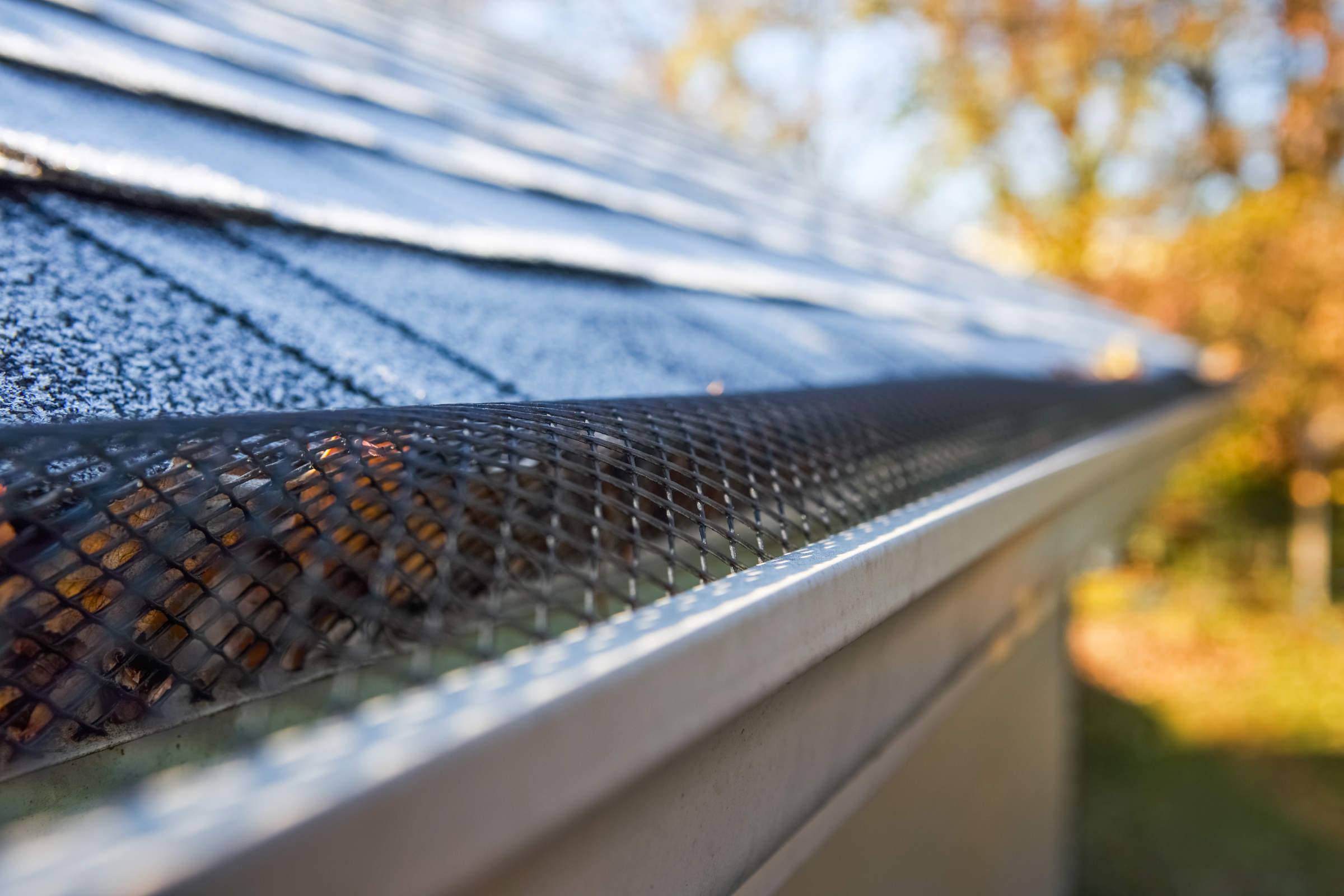
Plastic and vinyl guards sit in a similar category. If you’re going to cover your gutters at all in this valley, all-metal gutter guards are the only version of the idea that makes sense. Our own BroGuard system is built that way: a stainless steel micro-mesh over an aluminum frame, with no plastic components anywhere in it.

What the Building Code Actually Says

You’ll see gutter guards marketed as “code required.” The reality is narrower and worth knowing.

California Building Code Chapter 7A, section 705A.4, reads in full: “Roof gutters shall be provided with the means to prevent the accumulation of leaves and debris in the gutter.”

That’s the entire requirement. Three things follow from it. It applies to new construction and to permitted additions and alterations in designated wildfire zones, not as a retrofit mandate on existing homes. It requires a means, without naming or certifying any specific product. And it confirms the underlying point of this whole post: what the code is worried about is the debris, not the gutter.

Where We Actually Sit Locally

Some straight talk about our own service area, because this gets exaggerated.

Under the state’s February 2025 fire hazard severity maps, twelve Contra Costa County cities contain Very High Fire Hazard Severity Zone areas. Danville is one of them. San Ramon is not.

That doesn’t mean San Ramon homes face no ember risk. Zones are drawn parcel by parcel, hazard varies enormously between a Dougherty Valley interior lot and a home backing to open space on the west side, and Diablo winds don’t check a map. It does mean you should look up your own address rather than trust a marketing claim about your neighborhood. The San Ramon Valley Fire Protection District publishes an interactive zone viewer for exactly this purpose, and it takes about a minute.

One more piece of straight talk: gutters and gutter guards are not on California’s Safer from Wildfires list, the framework insurers use for wildfire mitigation discounts. That list covers roofing, vents, eaves, windows, the five-foot ember-resistant zone, and defensible space. Anyone telling you a gutter guard will lower your premium is telling you something that isn’t true. We’d rather you hear that from us.

What’s Actually Worth Doing

Short version, in order of impact:

  1. Keep the gutters clear through fire season. This is the highest-value action, and it’s the one both UC ANR and Fire Safe Marin lead with. In our valley that means a cleaning in late summer, when redwood and pine needle drop peaks, ahead of the Diablo wind months.
  2. If your gutters are vinyl, plan to replace them with metal. Not urgent this week, but put it on the list.
  3. If you use guards, use all-metal ones. And if you have foam inserts in there now, pull them out.
  4. Remember that guards still need attention. Fire Safe Marin notes that some designs cause debris to pile up on the roof behind the gutter instead, which trades one problem for another. Guards reduce maintenance. They don’t end it.

We’ll come look

If you’re not sure what you have up there, we’ll tell you. Our free guard inspection covers what your gutters and any existing guards are made of, whether debris is accumulating where you can’t see it, and whether the setup makes sense for your trees and your roofline. If everything looks fine, that’s what we’ll say.

Request a free guard inspection or call (925) 905-9555.

Frequently Asked Questions

Do gutter guards help with embers?

Indirectly, and it’s worth being precise about how. Guards don’t stop embers, which are small enough to pass through almost any screen. What they do is reduce the fuel those embers land in by keeping leaves and needles out of the trough. That matters, because the fire risk comes from the debris rather than the gutter. Metal guards do this without adding combustible material of their own. Foam and plastic guards add fuel, which defeats the purpose.

Are metal gutters actually fire resistant?

The metal itself won’t ignite, which is why UC ANR and Fire Safe Marin both recommend metal over vinyl. But metal gutters stay attached during a fire, so debris burning inside one holds flame against the roof edge. Vinyl gutters melt and drop burning material to the ground instead. Neither is safe when full. A metal gutter that’s kept clean is a genuinely hardened detail on a house.

Does California code require gutter guards?

Not for existing homes. California Building Code section 705A.4 says roof gutters “shall be provided with the means to prevent the accumulation of leaves and debris in the gutter,” and it applies to new construction and permitted work in designated wildfire zones. It doesn’t specify or certify any particular product, and it isn’t a retrofit requirement.

Is San Ramon in a Very High Fire Hazard Severity Zone?

Under the state’s February 2025 maps, San Ramon is not among the twelve Contra Costa cities that contain Very High zones. Danville is. Zones are mapped parcel by parcel, though, so the right way to answer this for your own house is to look up your address in the San Ramon Valley Fire Protection District’s zone viewer rather than rely on a city-level answer.

Get Your San Ramon Home Rain-Ready Before the First Storm

The first meaningful rain in the Tri-Valley usually shows up somewhere between mid-October and mid-November. Not the ten-minute sprinkle that spots your windshield, but the first storm that actually runs water down a roof for a few hours. If you want to prepare your gutters for the rainy season in California, that date is your deadline, and it’s worth working backward from it.

Here’s the honest scheduling note. Everyone in the valley remembers their gutters during the same week, usually the week the forecast first mentions rain. Our phones light up, and so does every other gutter company’s. If you call in mid-September you’ll get the appointment you want. If you call the Thursday before the first storm, you’ll get whatever’s left. That’s the whole pitch. No urgency beyond the calendar.

Why One Dry April Doesn’t Mean You’re Fine in December

San Ramon averages somewhere around 18 to 20 inches of rain a year depending on where in the valley you are, which sounds manageable spread across twelve months. It isn’t spread across twelve months. Nearly all of it falls between November and April, and within that window it arrives in a small number of large storms.

The research is striking on this point. Work from the Center for Western Weather and Water Extremes at Scripps found that in Northern California, roughly 60 to 120 hours of rainfall per year deliver more than half of the annual total. That’s a handful of days doing most of the work, and increasingly those days are atmospheric river events that dump an inch or more in a few hours.

This is why a system that handled last April’s light rain can still fail in December. A partially clogged gutter moves water fine at a trickle. Put an inch-an-hour storm through it and it overflows at the weakest point, usually over the front lip and down the siding, or backward against the fascia where you won’t see the damage until the paint starts bubbling. The failure isn’t gradual. It shows up the first time the system gets tested at full volume.

The pre-rain walk-through

None of this takes long, and most of it you can do from the ground.

1. Clear the debris, including the parts you can’t see. Valley oak leaves, acorns, sweetgum balls, and a summer’s worth of redwood and pine needles are sitting in there now. Acorns are the ones that matter most, since they don’t break down and they roll straight into downspout openings. A gutter cleaning before the rain starts is the single highest-value thing on this list.

2. Flush it and confirm the water comes out. Run a hose into the gutter at the far end from each downspout. Water should move steadily toward the outlet and come out the bottom at roughly the volume you put in. A weak trickle at the bottom means there’s a blockage in the downspout itself, which is common and easy to miss because the gutter above it looks clean.

3. Follow the water to where it actually lands. This is the step most people skip. Walk to each downspout outlet and look at the ground. Is there an extension, and is it still pointed away from the house? Extensions get kicked loose by lawn crews, moved for gardening, or knocked sideways over the summer. If water is discharging within a couple of feet of the foundation, you have a drainage problem regardless of how clean the gutters are.

4. Read the evidence from last winter. Your gutters already told you where they struggle. Look for dark vertical streaks on the siding or fascia below the gutter line, which mark where water went over the edge. Look for sections that visibly sag or hold a pool of standing water. Check the seams and corners for separation, and look at the fascia board itself for soft spots, discoloration, or peeling paint. Any of those are worth a repair now rather than in the middle of January.

5. Look up at the roofline. Debris in the valleys funnels straight into the gutters during the first storm, so a roof that looks clear from the driveway isn’t necessarily clear where it counts.

About the ladder

Straight talk on this one. If you have a single-story roofline, a stable ladder on level ground, and someone home with you, a pre-season gutter check is a reasonable Saturday project.

If you have a two-story roofline, it isn’t. That’s not us trying to talk you into a service call. It’s that a two-story gutter puts you 20 feet up on an extension ladder, leaning sideways to reach a section, on ground that may not be level, holding tools. Falls from ladders are the most common serious injury in home maintenance, and reaching out to the side while elevated is exactly the position that causes them. Multi-story homes, steep pitches, tile roofs, and anything over a hardscape or a slope are jobs for someone with the right equipment and the practice to use it.

There’s no shame in the split, either. Plenty of our customers do their own single-story back gutters and have us handle the two-story front.

What To Do With All This

If you want the full year rather than just the pre-season push, our season-by-season gutter care guide walks through what drops when in the San Ramon Valley and why we recommend cleaning twice a year here.

And if you’d rather have someone look at it before the rain does, we offer a free pre-season inspection. We’ll check flow, seams, hangers, pitch, and where your downspouts actually discharge, then tell you plainly what needs doing and what can wait. Sometimes the answer is nothing, and we’ll say that too.

Book your free pre-season inspection or call us at (925) 905-9555.

A Year of Gutter Care in the San Ramon Valley: A Season-by-Season Guide

How often should you clean gutters in California? In the San Ramon Valley, twice a year is the honest answer: once in late spring and once in late fall. That surprises people who moved here from somewhere with a proper autumn, because the assumption is that leaves fall once and then you’re done until next October. Our trees don’t work that way. The Tri-Valley has two distinct debris seasons, and a gutter that only gets cleaned in November spends the whole spring quietly filling back up.

This is the long version of that answer: what actually lands in your gutters, when, and what’s worth doing about it in each season.

Why the Tri-Valley Genuinely Has Two Debris Seasons

Most gutter maintenance advice is written for the Northeast. Deciduous trees drop everything in a six-week window, you clean up after, winter arrives, done.

Here, the calendar is split. Our evergreens (coast live oak, redwood, pine) shed while they grow, dropping old foliage in spring and summer rather than saving it for fall. Our deciduous trees, meaning valley oak, sycamore, and the sweetgums and liquidambars planted through Dougherty Valley and Gale Ranch, do the traditional autumn drop. Two different groups of trees, two different schedules, and most yards in the valley have both.

Add the timing of our rain. We get nearly all of our annual rainfall between November and April, which means the material that lands in spring sits in a warm dry gutter for six months and compacts into something closer to soil than debris. By the time the first real storm arrives, it isn’t a pile of leaves that water can push through. It’s a dam.

Spring: March Through May, the Season Nobody Expects

This is the surprise. Coast live oak is evergreen, so people assume it never makes a mess. It does. It just does it in spring, dropping last year’s leaves as the new ones push out. Somewhere around March, a mature live oak will carpet everything under it with small, stiff, curled leaves that are almost purpose-built to wedge into a downspout opening.

At the same time, oaks throw catkins, the dangling, worm-like pollen strands that cover cars and patio furniture in March and April. They’re light and stringy, they mat together when they get damp, and they slip through screens that stop bigger leaves. California sycamores add their own contribution: seed balls that break apart into a fine brown fuzz that travels on the wind and clogs anything with a filter.

Spring Checklist:

  • Clean or schedule a cleaning after the catkin drop finishes. Late April into May is the sweet spot
  • Flush downspouts with a hose and confirm water is actually coming out the bottom
  • Clear matted catkins off the top of any gutter guards; screens can stay covered even when the trough underneath is clean
  • Check that downspout extensions still direct water away from the foundation after winter storms

Summer: June Through August, Dry but Not Quiet

Summer is the valley’s inspection season. There’s no rain to reveal problems, which is exactly why it’s the best time to find them before the rain does.

It’s also when the needles peak. Redwoods and pines shed year-round, but the heavy flush comes in the heat of late summer, and inland San Ramon runs considerably hotter than the coastal range redwoods actually want, so trees here shed more than their Santa Cruz cousins do. If you have a redwood anywhere near your roofline, you have a year-round, low-grade needle problem that spikes in August and September.

Here’s the part worth knowing: fine redwood needles pass straight through coarse gutter screens. Standard mesh and slotted screens are sized to stop leaves. Needles are thinner than the openings, so they drop right through, settle into the trough, and pack down where you can’t see them. Plenty of homeowners with guards installed are genuinely surprised to learn their gutters are full. If redwoods are your main issue, the guard system matters more than whether you have one at all. Micro-mesh guards with a fine enough weave are the ones that handle needles.

Summer Checklist:

  • Walk the perimeter and look for sagging sections, separated seams, or gutters pulling away from the fascia
  • Check hangers and spikes, since summer heat cycles loosen fasteners
  • Look for peeling sealant at inside and outside corners, the most common leak point
  • Confirm gutters still pitch toward the downspouts; standing water leaves a visible tide line
  • Book any repairs now, while the schedule is open and the roof is dry

Fall: September Through November, the Season Everyone Knows

Now the deciduous trees take their turn. Valley oaks drop leaves and acorns from October into November, and acorns are their own category of problem. They don’t decompose, they don’t flush, and they roll straight into downspout openings and sit there. Sweetgum balls do the same thing. Add a heavy needle carryover from summer and this is the biggest volume of the year.

The timing matters more than the thoroughness. Clean too early and you’ll do it again; clean too late and the first storm finds a full gutter. The window in the San Ramon Valley is roughly mid-November to mid-December, after the valley oaks have finished and before the rain gets serious. That’s the single most important gutter cleaning of the year.

Fall Checklist

  • Schedule the main cleaning for the second half of November
  • Clear acorns and seed balls out of downspout openings specifically, not just the trough
  • Test every downspout with a hose after cleaning
  • Check that water leaving the downspouts is heading away from the house and not pooling near the slab
  • Look at the roof valleys while you’re up there, since they funnel debris straight into the gutters

Winter: December Through February, Watch It Work

Winter maintenance in the Tri-Valley is mostly observation, and the best time to do it is during an actual storm. Five minutes at the window while it’s raining hard will tell you more than an hour on a ladder in July.

Winter Checklist:

  • During a real downpour, look for water sheeting over the front edge of the gutter, which means a clog or an undersized downspout
  • Check for drips at the corners and end caps
  • Watch where the downspouts discharge; soil erosion or a puddle against the foundation means the extension isn’t long enough
  • Note any section that overflows and flag it for a spring repair rather than climbing up in the wet

The Practical Version of All of This

If you’d rather not track oak phenology to keep water off your siding, that’s reasonable. Most San Ramon Valley homes do fine on a simple rhythm: a spring cleaning in late April or May, a main cleaning in late November, and a look at the gutters during the first big storm of the season. Homes with redwoods, mature live oaks, or a lot of overhang usually want a third visit.

That’s the thinking behind our gutter maintenance program. The visits are already scheduled around the local drop calendar, so nobody has to remember. And if you’d like a straight answer about your specific roofline and trees, we’ll come look and tell you what we see. Request a free estimate and we’ll take it from there.

📋 Free download: The San Ramon Valley Gutter Calendar

One page. Every season, what drops, when to clean, and a short checklist you can stick inside a cabinet door. Enter your email and we’ll send it over.

[Calendar]

Frequently Asked Questions

How often should I clean my gutters in California?

In the San Ramon Valley, twice a year: once in late spring after the oak catkins and coast live oak leaf drop finish, and once in late fall after the valley oaks are bare. Homes with redwoods, pines, or heavy tree cover over the roof often need a third visit in late summer, when needle drop peaks.

When is the best time to clean gutters in the Bay Area?

Mid-November to mid-December is the most important window, after the deciduous trees have finished dropping and before the rainy season gets going. The second key window is late April into May, once spring catkin and live oak leaf drop has run its course.

Do gutter guards mean I never have to clean my gutters?

No, and be cautious of anyone who says otherwise. Guards dramatically reduce how much lands in the trough, but they still need the debris cleared off the top of them, and coarse screens don’t stop everything. Fine redwood needles pass straight through standard mesh, so if redwoods are your main source of debris, a micro-mesh system is what actually solves the problem.

Why do my gutters fill up in spring?

Because coast live oak is evergreen and sheds its old leaves in spring as new growth comes in, and because oaks release catkins in March and April. Sycamore seed fuzz adds to it. It genuinely catches people off guard, and it’s the reason once-a-year cleaning doesn’t hold up here.